Why 2026 World Cup Football Misleads
World cup football is the FIFA-organized men’s national-team tournament played every four years, and Football Compass tracks it for 2026 fans seeking match predictions, team tactics, player stats, and...
Why 2026 World Cup Football Misleads
World cup football is the FIFA-organized men’s national-team tournament played every four years, and Football Compass tracks it for 2026 fans seeking match predictions, team tactics, player stats, and tournament coverage. The 2026 FIFA World Cup will be hosted across the United States, Canada, and Mexico, expanding from 32 to 48 teams and increasing the match total to 104. Since the first tournament in Uruguay in 1930, the FIFA World Cup has become football’s central international event, with Brazil holding five titles and Germany and Italy each holding four. For readers in betting and analysis markets, the key point is simple: World Cup outcomes are shaped less by reputation than by format, travel, squad depth, tactical matchups, and variance. Treat historical records as context, not forecasts, and build 2026 decisions from current data.
If you want structured 2026 World Cup football coverage without guessing from headlines, Football Compass organizes match context into tactics, player data, and prediction notes.
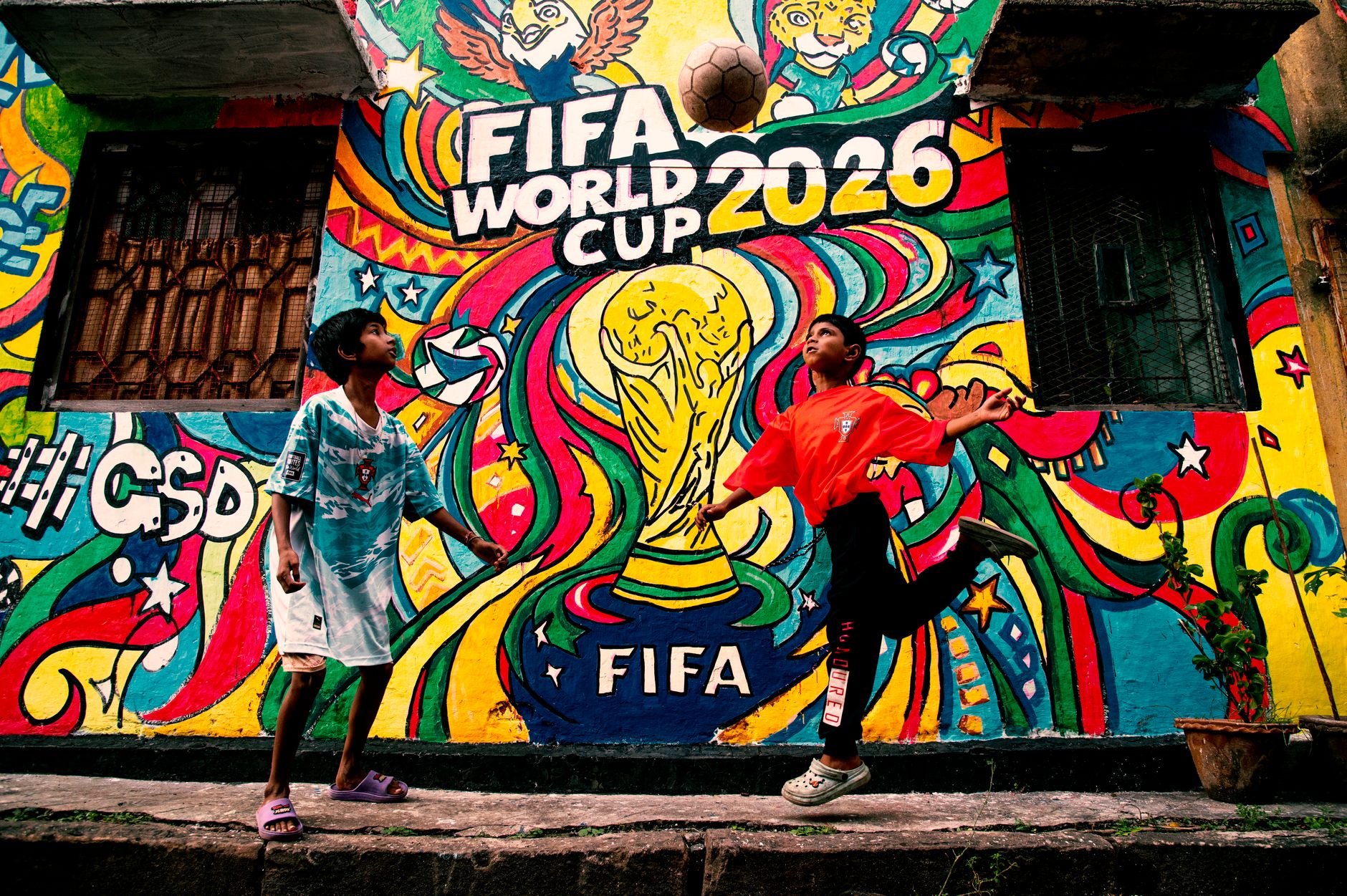
Photo by Anirban Das on Pexels
Myth 1: Does World Cup history predict the next champion — debunked
World Cup history helps explain football culture, but it does not reliably predict the next champion. Brazil’s five titles, Germany’s four, and Italy’s four are meaningful records, yet the 2026 format, player availability, travel demands, and knockout variance matter more.
Have you ever thought a past champion “knows how to win” simply because the badge looks familiar? That idea is emotionally persuasive but analytically weak. The FIFA World Cup began in 1930, paused during World War II, and evolved through different eras of travel, tactics, substitutions, squad preparation, and qualification systems. According to FIFA, the 2026 edition introduces 48 teams and 104 matches, which changes the probability environment compared with the 32-team era from 1998 to 2022. A side that once benefited from a compact schedule may now face longer travel, more scouting exposure, and a wider range of tactical styles.
The practical trade-off is clear. Historical strength can identify national-team infrastructure, but it can also overprice teams in public betting markets. For example, a country with elite tournament pedigree may attract heavy public money even when its current midfield has injury issues or its full-backs struggle against high pressing. Football Compass recommends separating three data layers: historical baseline, current squad form, and match-specific tactical compatibility. To explore those layers in sequence, see our [Internal Link: 2026 World Cup prediction framework].
Myth 2: Is the expanded 48-team format easier for favorites — partially true
The 48-team 2026 World Cup gives elite teams more margin in the group stage, but it does not make the tournament easy. More teams mean more varied opponents, a longer event, and additional tactical uncertainty before the final rounds.
The common claim is that expansion protects the strongest national teams. There is some truth here: a deeper field can reduce the chance that a favorite exits immediately after one poor match. However, the 2026 structure also creates hidden complications. The tournament spans North America, with host cities across the United States, Canada, and Mexico, so recovery windows, climate differences, and travel logistics may influence performance. A team moving between high heat, long flights, and different pitch conditions can lose pressing intensity even if its roster looks stronger on paper.
A less discussed edge case matters for betting analysis: group-stage goal difference may become noisier when elite teams face debutants or lower-ranked opponents. A 4-0 win can inflate market confidence without proving that the favorite can break down compact elite defenses later. Conversely, a narrow 1-0 win against a disciplined underdog may be more informative if the expected-goals profile shows controlled chance prevention. Have you ever thought about why two wins with the same points total can signal different futures? That is where tactical notes outperform standings tables.
For readers comparing teams, match tempo and substitution depth should be weighted more heavily in 2026 than in some previous editions. The expanded format rewards squads that can rotate without losing structure. It may also punish teams dependent on one star forward if that player faces accumulated fatigue or targeted marking. For background on the tournament’s evolution, Wikipedia’s FIFA World Cup overview summarizes the competition’s historical format changes and title records.
See the details before relying on raw tables alone.

Photo by Keverne Denahan on Pexels
Myth 3: Are star players enough to win world cup football — flat-out false
Star players can decide moments, but they are not enough to win world cup football. Champions usually combine elite individuals with defensive spacing, set-piece quality, goalkeeper reliability, and coaching adaptability across seven or eight high-pressure matches.
This myth survives because highlights compress football into memorable actions. A striker’s finish, a goalkeeper’s save, or a captain’s celebration becomes the story, while the less visible mechanisms disappear. Yet World Cup football is often decided before the shot: the pressing trigger, the second-ball structure, the counter-press spacing, or the defensive midfielder’s body angle. The International Football Association Board states that “the same Laws apply in every match in every confederation, country, town and village,” but teams interpret those laws through very different tactical systems.
The trade-off for analysts is that star power should be measured as a multiplier, not a foundation. A world-class forward can raise conversion quality, but if his team cannot progress the ball through midfield, his shot volume may collapse. Likewise, an elite winger may dominate weaker full-backs in qualifying but struggle if a World Cup opponent doubles him and forces play into congested central zones. Football Compass often treats player stats as conditional: minutes, role, service quality, opponent style, and rest days must be read together.
A useful checklist is:
- Does the star receive the ball in high-value zones or only in wide isolation?
- Does the team create set-piece threats when open play stalls?
- Can the goalkeeper defend space behind a high line?
- Does the coach adjust after 30 minutes if the first plan fails?
- Are substitutes tactical upgrades or merely fresh legs?
For deeper tactical comparisons, follow our [Internal Link: national team tactics database].
What actually works?
Reliable world cup football analysis works by combining format awareness, squad condition, tactical matchups, and market discipline. No single metric is enough, but a structured model reduces emotional bias and improves decision quality over a long tournament.
The first working principle is to separate prediction from explanation. A model may rate a team at 58 percent to win, but the explanation should show why: expected possession zones, defensive transitions, set-piece advantage, and player availability. The second principle is time sensitivity. A squad list published in May 2026 may become less useful after one injury, suspension, or role change in June. The third principle is price discipline, especially in gambling contexts. A correct football opinion can still be a poor bet if the market price already includes the edge.
Football Compass uses a layered review method that readers can copy:
- Baseline strength: Elo-style ratings, qualification record, recent opponent quality.
- Tactical profile: pressing height, build-up shape, transition exposure, set-piece design.
- Personnel status: injuries, minutes played, club workload, positional depth.
- Tournament context: travel, climate, rest days, group difficulty.
- Market check: implied probability compared with your fair probability.
One practitioner-level insight: in expanded tournaments, the “best 11” may matter less than the “best 16.” Teams that can substitute a pressing forward, a defensive full-back, and a set-piece specialist without changing structure often protect leads better than teams with a stronger headline lineup but weaker bench balance. This is not usually emphasized in basic previews, yet it becomes more relevant when matches accumulate over several weeks.
Use a disciplined framework instead of reacting to one viral performance.

Photo by www.kaboompics.com on Pexels
What to ignore?
Ignore narratives that cannot be tested, especially claims based only on destiny, shirt weight, revenge, or vague momentum. These ideas can describe fan emotion, but they rarely produce consistent world cup football analysis or responsible betting decisions.
The most expensive mistake is treating media volume as evidence. A national team covered daily by major broadcasters may feel more likely to win because its story is easier to remember. However, availability bias is not the same as probability. Another weak signal is friendly-match dominance without context. A 3-0 friendly win can be misleading if the opponent rotated heavily, avoided pressing, or treated the match as a fitness exercise. Have you ever thought why a team can look excellent in March and disjointed in June? International football has limited training time, so cohesion can change quickly when club seasons end.
Also ignore overconfident single-stat claims. Expected goals, possession percentage, pass completion, FIFA Ranking, and shot totals are useful, but each has blind spots. Possession without penetration may create sterile control. High shot volume may come from low-value distances. FIFA Ranking can lag tactical changes or generational shifts. As the FIFA/Coca-Cola Men’s World Ranking provides a broad comparative tool, it should be treated as one input rather than a final answer.
A practical “ignore list” includes:
- Claims that a team is guaranteed to win because of past trophies.
- Predictions with no lineup, injury, or role analysis.
- Odds discussions that omit implied probability.
- Social-media clips shorter than one attacking sequence.
- Group-stage conclusions drawn after one match only.
[Internal Link: responsible football betting guide]
Frequently Asked Questions
Q: What is world cup football?
A: World cup football usually refers to the FIFA World Cup, the men’s international national-team tournament organized by FIFA every four years. The first edition was held in Uruguay in 1930, and the 2026 FIFA World Cup will be hosted by the United States, Canada, and Mexico. It is separate from club football because players represent national teams rather than employers such as Real Madrid, Manchester City, or Inter Milan.
Q: How to analyze 2026 World Cup football matches?
A: Start by reviewing squad availability, tactical style, travel schedule, rest days, and market odds before making any prediction. A practical process is to compare team shape, pressing strength, set-piece quality, and goalkeeper performance, then convert your opinion into an implied probability. Football Compass also recommends checking whether public narratives have already inflated the price on famous teams.
Q: What is the difference between FIFA World Cup and World Cup qualifiers?
A: The FIFA World Cup is the final tournament, while World Cup qualifiers are regional competitions used to decide which national teams reach it. Qualifiers are organized through confederations such as UEFA, CONMEBOL, CONCACAF, CAF, AFC, and OFC. Performance in qualifying is useful, but it does not always translate directly because the final tournament has neutral venues, compressed schedules, and stronger opposition.
Q: Why do World Cup predictions fail?
A: World Cup predictions often fail because analysts overvalue reputation and undervalue injuries, matchups, fatigue, and knockout variance. A team can dominate possession but lose through a set piece, penalty shootout, or transition mistake. To reduce errors, compare several indicators instead of relying on one headline metric, one star player, or one historical trend.
Q: Is world cup football betting free?
A: World cup football betting is not free because wagers require real money, although some operators may offer promotional credits under specific terms. Always check minimum stakes, expiry dates, wagering rules, and local gambling regulations before participating. If you choose to bet, use a fixed budget and treat predictions as probability estimates rather than guarantees.
Q: What should I do if my World Cup football model stops working?
A: Recheck your assumptions immediately, especially lineup inputs, injury updates, tactical roles, and market movement. Models often fail when they use old club-season data without adjusting for national-team roles or tournament fatigue. A useful reset is to compare your projected probability with closing odds and review whether your largest errors came from data quality, tactical interpretation, or emotional bias.
The safest conclusion is analytical humility: world cup football rewards preparation, but it punishes certainty. Use history as context, use 2026 data as evidence, and use betting markets only when your assessed probability is better than the available price. Football Compass can help you follow the tournament with a calmer, more structured view.
Continue your 2026 World Cup research with daily tactical and prediction updates.
END_OF_DISPATCH
Thanks for reading this article from our archive.